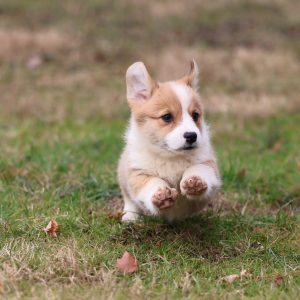
Corgi Puppy Herding and Nipping: How to Redirect the Instinct
Corgi Puppy Herding and Nipping: How to Redirect the Instinct
Learn why corgi puppy herding and nipping happens, how to redirect the instinct, and practical training tips for calmer play with children and adults.
Why Does My Corgi Puppy Nip and Try to Herd People?
Your Corgi puppy races behind your child and grabs at a pant leg. A moment later, the puppy circles the family in the backyard or targets your ankles as you walk through the kitchen. Although these behaviors can be frustrating, corgi puppy herding and nipping often has a logical explanation: Pembroke Welsh Corgis were developed to move livestock.
That history matters when deciding how to respond. Herding-related behavior is not something owners should punish harshly, nor should every nip be dismissed with, “That’s just what Corgis do.” Puppies still need to learn that human skin, clothing, and running children are not appropriate outlets for their instincts.
This guide will help you distinguish normal puppy mouthing from herding behavior, decide when intervention is needed, and redirect your puppy toward more appropriate activities. We’ll also cover exercise, mental stimulation, interactions with children, and realistic training timelines so you can develop a plan that works with your Corgi’s instincts rather than constantly fighting against them.

Quick Answer: How Do I Stop My Corgi Puppy From Herding and Nipping?
Managing corgi puppy herding and nipping starts with preventing opportunities to rehearse the behavior and immediately redirecting your puppy toward an appropriate toy, cue, or activity. Avoid chasing, yelling, or physically punishing the puppy, since those reactions can increase excitement or create fear. Practice calm behaviors around movement and provide daily mental and physical outlets appropriate for your puppy’s age. If nipping becomes intense, difficult to interrupt, or appears connected to fear or aggression, consult a qualified trainer or veterinary behavior professional.
Why Corgis Have Such Strong Herding Instincts
To understand the behavior, it helps to understand what Corgis were originally expected to do.
Pembroke Welsh Corgis are cattle-herding dogs. Their low stature allowed them to work near livestock while their speed, awareness, and persistence helped them influence where animals moved. The American Kennel Club’s Pembroke Welsh Corgi profile describes the breed’s history as a cattle herder.
Those instincts don’t disappear because a modern Corgi lives in a suburban home.
Instead of cattle, a puppy may become interested in:
- Children running across the yard
- People walking quickly through the house
- Other pets moving from room to room
- Feet and ankles
- Bicycles or scooters
- Flapping pants or shoelaces
Compared to other small breeds developed primarily for companionship, a Corgi may be much more sensitive to movement. Unlike more independent terriers, many Corgis also pay close attention to what their family members are doing and may attempt to participate in—or control—the activity.
That doesn’t mean owners should tolerate painful nipping. Breed instinct explains where the behavior comes from; it doesn’t determine what behavior should be permitted.
The goal is to give the instinct rules and appropriate outlets.
Is It Herding, Normal Puppy Mouthing, or Something Else?
Not every puppy bite is herding behavior.
Young puppies explore with their mouths, particularly while teething. During normal play, a puppy might grab hands, sleeves, toys, or whatever happens to be nearby. Herding-related behavior tends to have a stronger connection to movement.
For example, a puppy that repeatedly targets ankles when someone begins running may be responding to a herding trigger. A puppy lying on the floor chewing your fingers may simply be displaying ordinary puppy mouthing.
Watch the context.
Typical puppy mouthing may include:
- Chewing hands during play
- Grabbing sleeves
- Increased chewing during teething
- Mouthing when overtired
Possible herding behavior may include:
- Chasing feet
- Targeting ankles
- Circling people
- Becoming highly aroused when children run
- Attempting to control another pet’s movement
Many families underestimate the role of fatigue, too. A puppy who becomes increasingly wild and mouthy every evening may need sleep rather than another hour of play.
Behavior that involves stiff posture, guarding, sustained growling, fear, or bites intended to create distance deserves a different evaluation. Don’t automatically label concerning behavior as “herding.” Discuss sudden or severe behavioral changes with your veterinarian or an appropriately qualified behavior professional.
How to Redirect Corgi Puppy Herding and Nipping
Effective training focuses on teaching your puppy what to do instead.
Imagine your puppy begins chasing your ankles as you cross the room. Rather than yelling or continuing to walk while the puppy hangs onto your pants, stop moving. When the puppy disengages, redirect them to a toy or ask for a behavior they already understand, such as “sit” or “touch.” Reward the alternative.
Owners can also practice around controlled movement. Have one family member walk slowly while another rewards the puppy for remaining calm. Gradually progress from walking to slightly faster movement. If the puppy starts chasing feet, you’ve increased the difficulty too quickly.
Useful replacement skills include:
- Sit: gives the puppy a stationary job.
- Touch: redirects attention to your hand without encouraging biting.
- Place: teaches the puppy to settle while people move around.
- Leave it: helps interrupt fixation.
- Recall: brings the puppy away from moving children or pets.
- Toy retrieval: gives the mouth an appropriate target.
The American Veterinary Society of Animal Behavior recommends reward-based approaches to dog training.
Keep sessions short. Three to five minutes several times a day is often more productive for a young puppy than a 30-minute drill.
Most importantly, don’t deliberately trigger nipping repeatedly just to practice stopping it. Good training includes management so the unwanted behavior doesn’t become a daily habit.
Managing Corgi Puppies Around Running Children
Children can be especially exciting to a young Corgi because their movements are fast, unpredictable, and often accompanied by high-pitched voices.
Telling a child to “just stop running” isn’t a realistic long-term strategy. Instead, adults need to manage both sides of the interaction while the puppy develops better impulse control.
During high-energy play, consider using baby gates, exercise pens, or a leash handled by an adult. Give the puppy an activity away from the children’s feet, such as a stuffed food toy or supervised chew.
Then practice controlled interactions separately.
For example, have a child walk across the yard while an adult rewards the puppy for watching calmly. Once that becomes easy, the child can move slightly faster. The goal is for the puppy to learn that moving children predict calm behavior and rewards—not a chase.
Children should never be responsible for correcting nipping themselves. They should also avoid squealing, pushing the puppy away with their hands, or turning the situation into a chase game.
Many families underestimate how quickly an exciting interaction can push a young puppy. Five minutes of successful practice is more valuable than 30 minutes that ends with an overstimulated puppy repeatedly biting clothing.
Supervision should remain active until the puppy consistently demonstrates appropriate behavior around children.
Exercise and Mental Work Can Reduce Unwanted Herding
A Corgi needs an appropriate outlet for a brain developed to work.
However, simply exhausting your puppy isn’t the answer. Excessive running, repetitive ball chasing, or long forced walks can be inappropriate for a growing puppy and may create more arousal rather than better self-control.
Instead, divide activity throughout the day. Depending on age, health, and your veterinarian’s recommendations, a routine might include several short walks or exploration periods, three-to-five-minute training sessions, supervised play, food puzzles, and substantial scheduled rest.
Mental activities are particularly useful for Corgis. Try:
- Searching for treats around a room
- Beginner scent games
- Food puzzles
- Short obedience sessions
- Hide-and-seek
- Appropriate tug games with clear start-and-stop cues
A puppy who learns to use their brain is also learning how to transition between activity and calmness.
Physical care matters as well. Corgis have double coats, so brushing two or three times weekly is a practical baseline, with more frequent brushing during heavier shedding. Nail care is especially relevant to training because overgrown nails can affect comfortable movement. Check nails every couple of weeks and trim as needed.
Remember that sudden irritability or unusual sensitivity to handling can sometimes indicate discomfort. If nipping changes abruptly or occurs when a particular body area is touched, schedule a veterinary examination rather than assuming the problem is behavioral.
Common Mistakes That Can Make Nipping Worse
The way owners respond can unintentionally turn ankle biting into a very entertaining game.
Running away is a classic example. From the puppy’s perspective, the moving target just became even more interesting.
Other mistakes include:
- Waving hands around the puppy’s face
- Wrestling with hands instead of toys
- Allowing ankle chasing sometimes but correcting it other times
- Yelling, which can increase excitement
- Punishing normal puppy exploration
- Waiting until the puppy is completely overstimulated before intervening
Another misconception is that more exercise will automatically solve the problem. An overtired puppy can become dramatically mouthier, so owners need to balance activity with sleep and calm periods.
At Gold Star Corgis, we prioritize early experiences that help puppies begin learning how to interact appropriately with people and their surroundings. In our experience raising Corgis, families have an easier transition when they understand that managing herding instincts requires consistency rather than trying to eliminate those instincts altogether.
Prospective owners exploring Available Puppies should consider this working-dog characteristic when deciding whether a Corgi matches their household. A family with energetic young children, for example, should be prepared to devote additional attention to supervised interactions and impulse-control training.
How Long Does It Take to Improve Herding and Nipping?
There isn’t a single age when the behavior automatically disappears.
Ordinary puppy mouthing often decreases as teething ends and training develops, but herding instincts can remain throughout adulthood. What changes is the dog’s ability to control those impulses.
Owners who consistently prevent rehearsal and reward alternative behaviors may notice gradual improvement over weeks and months. Adolescence can bring temporary setbacks, particularly as energy and confidence increase.
A realistic routine might involve 10–20 minutes of deliberate training spread across several short sessions each day, plus age-appropriate exercise and enrichment. Training should also happen naturally during daily life: waiting calmly before going outside, settling while children play, or checking in with you instead of chasing movement.
Seek professional assistance if your puppy regularly breaks skin, becomes difficult to interrupt, displays concerning body language, or if the behavior is making interactions with children unsafe. Your veterinarian can also help determine whether pain or another medical issue could be contributing.
The goal isn’t to produce a Corgi with no herding instinct. It is to raise a dog that can experience the impulse and still respond to you.
Conclusion: Redirect the Instinct Instead of Fighting It
Corgi puppy herding and nipping makes much more sense when viewed through the breed’s working history. A puppy chasing ankles isn’t necessarily trying to be difficult; movement can trigger an instinct that generations of Corgis were specifically bred to use.
Owners still need boundaries. Prevent repeated ankle chasing, teach alternative behaviors, supervise interactions with children, provide appropriate physical and mental activity, and make rest part of the daily routine.
With consistency, your puppy can learn that people aren’t livestock and ankles aren’t toys—without suppressing the intelligence and drive behind the behavior.
For families considering a Pembroke Welsh Corgi, Gold Star Corgis offers additional information about our puppies, breeding program, and how we prepare puppies for their transition into family homes.
Frequently Asked Questions
Is corgi puppy herding and nipping normal?
Yes, corgi puppy herding and nipping can reflect both normal puppy mouthing and the breed’s natural herding tendencies. It should still be redirected consistently so chasing and biting people don’t become established habits.
Why does my Corgi puppy bite my ankles when I walk?
Moving feet can trigger a Corgi’s interest in controlling movement. Stop rather than turning the interaction into a chase, then redirect your puppy to a toy or a trained behavior such as sit, touch, or place.
Will my Corgi eventually grow out of nipping?
Teething-related mouthing often decreases with maturity, but you shouldn’t depend on age alone to solve the problem. Herding instincts can remain into adulthood, so puppies need to learn appropriate ways to respond to movement.
Should I punish my Corgi puppy for nipping?
Avoid physical punishment, intimidation, or harsh corrections. Interrupt the opportunity, redirect the puppy, reinforce the behavior you want, and manage situations that are currently too difficult.
How can I stop my Corgi from herding my children?
Use active adult supervision and prevent the puppy from repeatedly chasing running children. Practice calm responses to movement at easier levels and gradually increase difficulty as your puppy develops impulse control.
When should I get professional help for puppy biting?
Seek help if biting regularly breaks skin, appears connected to fear or guarding, cannot be interrupted, or creates an unsafe situation for children or other household members. A veterinarian can also rule out pain or medical problems that may contribute to a sudden behavioral change.
Helpful External Resources
- American Kennel Club — Pembroke Welsh Corgi: Breed history, characteristics, and the Corgi’s herding background
- American Veterinary Society of Animal Behavior: Position statements and resources covering humane, reward-based dog training
- American Kennel Club — Puppy Biting: Practical guidance for understanding and redirecting puppy mouthing and biting